10 artists. 10 stories.
10 ways of seeing Buddy.

Meet the finalists of YoruBuddy. Each one has taken the same bear and given it a completely different story. Now the question changes: which story will become the Buddy Bear? Look closely, read the stories behind the designs, and vote for the YoruBuddy you want to see.

Scan the QR code or click the link to vote

Browse
01

Browse the ten finalist designs.

Read the story
02

Tap a design to see it up close and read the artist’s story.

Browse
03

Press Vote on your favourite. You can vote once, using your email address.

Meet the Finalists

10 Artists.
10 Stories.
1 Buddy.

Hover over a bear to take a closer look. Click to read its story and vote.

Dominion Aka
Joseph Steve
Vairagi Chukwudebe
Amarachi Ezeh
Esther Kikelomo Oyewale
John Adediran
Yemz Olapo
Ibraheem Shakioye
Hephzibah Asekhame
Marvelous Akinkunmi

Meet The Jury

Dotun
Popoola
Sandra
Mbanefo-Obiago
Ugoma
Ebilah

Obi
Asika
Dr. Nike
Davies-Okundaye

Nadine
Siegert

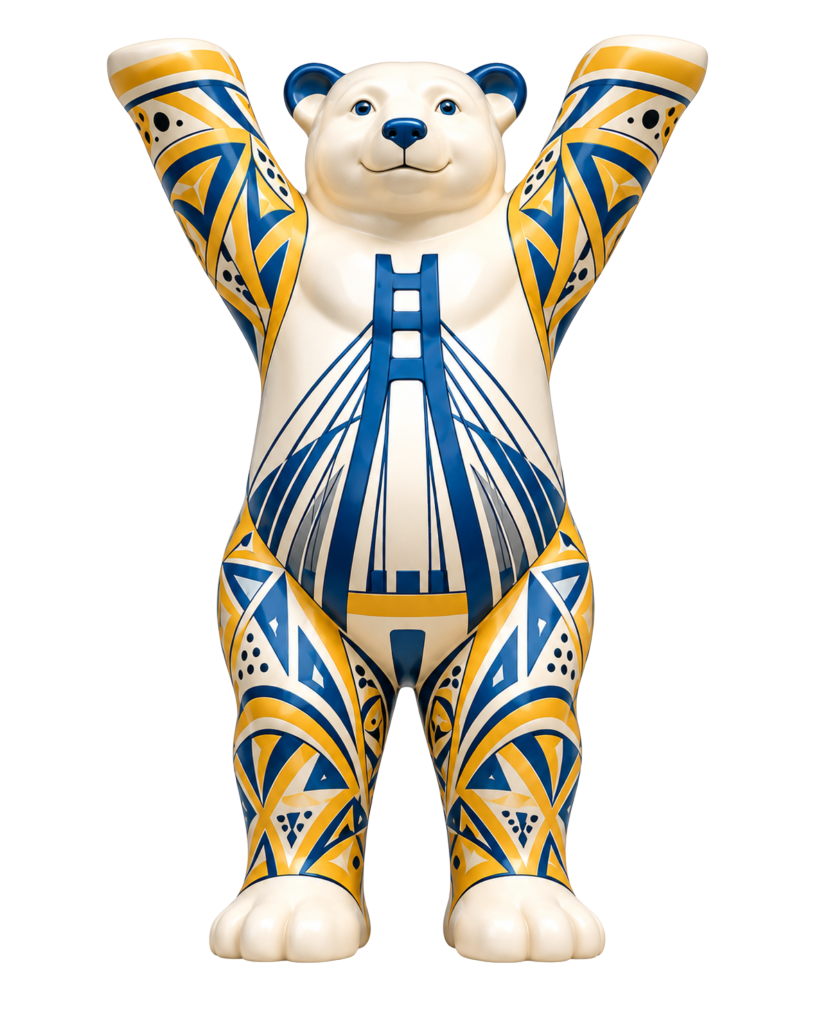
Dominion Aka

Bridge of Cultures reimagines the Buddy Bear as a meeting point between Lagos, Nigerian culture and modern German visual structure.

At the centre of the bear is a simplified interpretation of the Lekki-Ikoyi Bridge, representing connection, movement and cultural exchange.

The bridge flows into a composed Nigerian-inspired pattern system across the body, while modern geometric organisation introduces a sense of order, balance and structure.

Rather than separating Nigeria and Germany into two different sides, the design allows both visual languages to meet naturally as one composition.

Nigeria provides the cultural expression, German modernism influences the structure, and the bridge connects both ideas together.

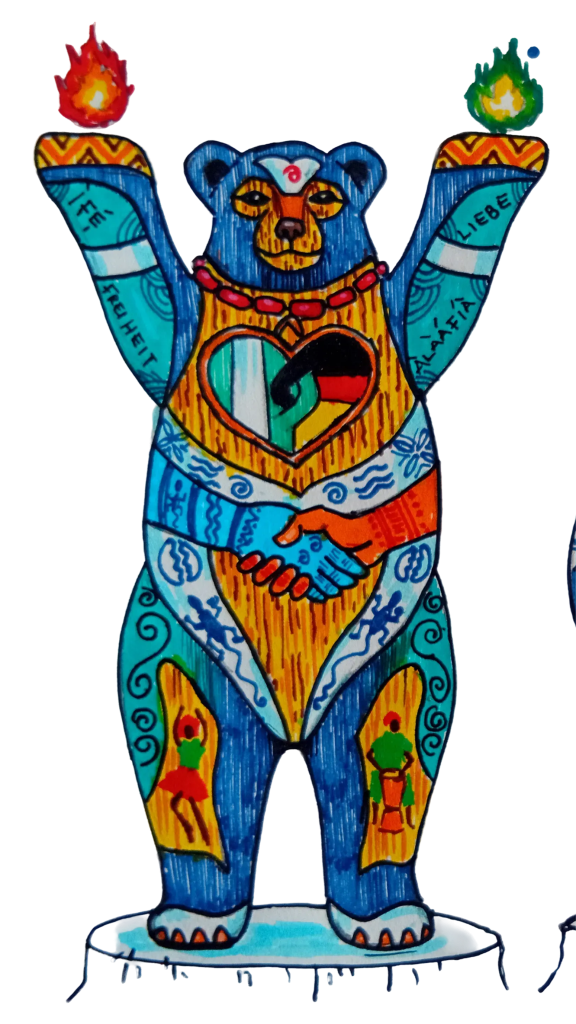
Joseph Steve

The Love We Bear reimagines the Berlin Buddy Bear through a Yoruba lens, shown from three angles. The bear, a symbol of Berlin and of the United Buddy Bears’ message of tolerance and understanding, carries Yoruba identity: an indigo body and white patterns drawn from adire cloth, red beads recalling royalty and pride, and golden surfaces inspired by the scarified Ife bronze heads. The icons draw on the batik work of Nike Okundaye and the Osogbo art movement.

The work celebrates what Germany and Nigeria share: diplomatic ties since 1960, and the experience of reconciling and rebuilding as one people. Four values appear in both languages across the bears: love(Ìfẹ́/Liebe), peace(Àlàáfíà), freedom(Freiheit) and friendship. At the center, two clasped hands sit inside a heart bearing the colours of both flags, while torches of red, yellow and green on the raised hands stand for friendship passed between nations.

When cultures meet with openness and respect, they keep their identities and grow stronger together. 

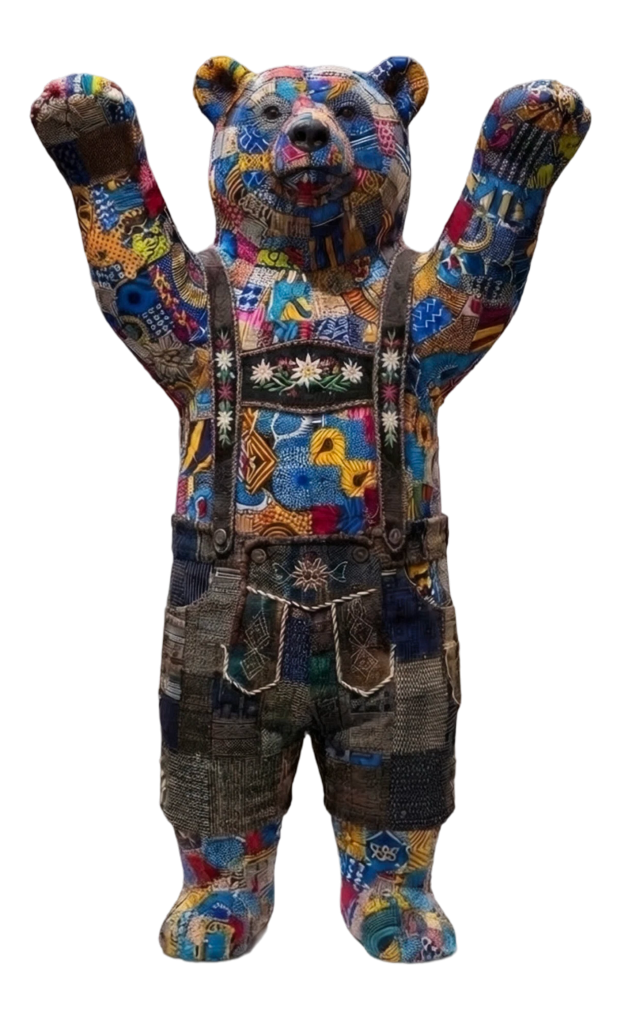
Vairagi Chukwudebe

Ogo Lederhosen is a multidisciplinary mixed-media sculpture that explores the intersection of international diplomacy, cultural exchange, and sustainable material practice. Utilizing the iconic silhouette of the Berlin Buddy Bear—a universal symbol of friendship, tolerance, and open arms—the work reimagines traditional European heritage through the vibrant lens of Nigerian textile traditions. 

The sculpture’s surface is meticulously constructed from hundreds of small, reclaimed fragments of Yoruba textiles, including handwoven Aso-Oke, indigo-dyed Adire, and vibrant Ankara prints. These tactile patches meticulously reconstruct traditional Bavarian Lederhosen trousers and coat the bear’s form. By fusing these distinct cultural garments and materials into a single unified form, the piece acts as a visual bridge connecting West African craftsmanship with European folklore. 

Rooted in an experimental approach to reclaimed materials, Ogo Lederhosen transforms discarded scraps into a dynamic celebration of mutual respect, global dialogue, and shared futures. 

Amarachi Ezeh

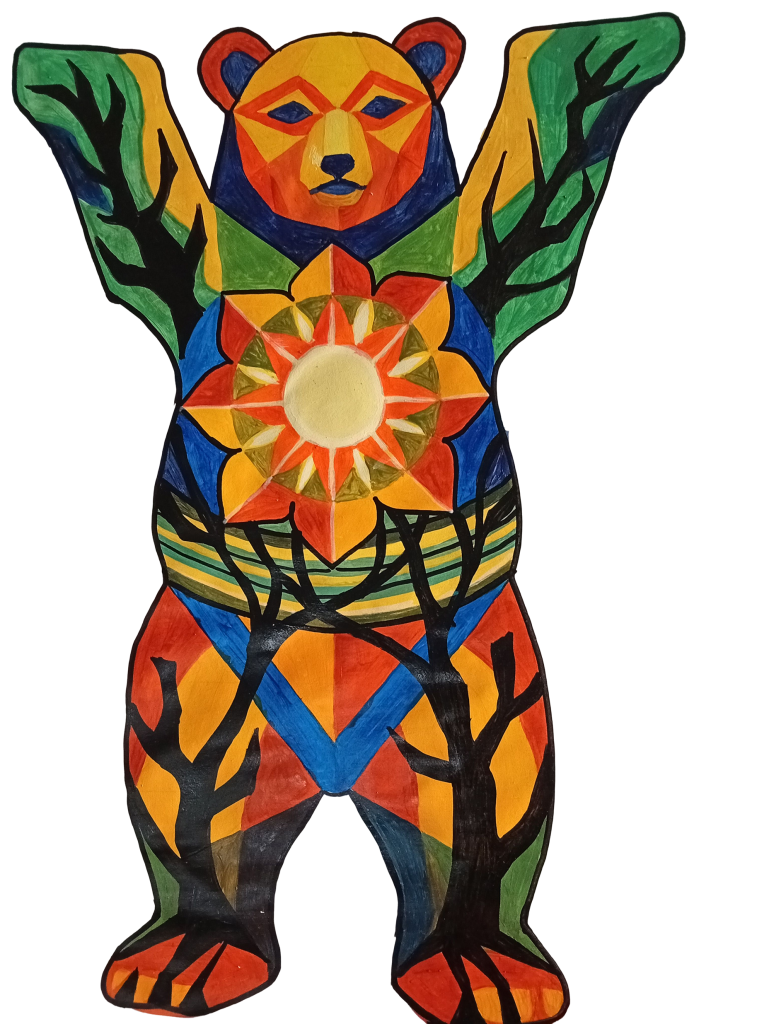
The Sun That Connects Us explores the historical and creative exchange between the experimental design philosophy associated with the Bauhaus Vorkurs and the mythological storytelling and cultural expression of Nigeria’s Mbari and Osogbo art movements. The front of the bear features a central bloom inspired by the Mbari concept of creation. It represents creative genesis, growth and ancestral connection. Surrounding organic root forms and a geometric sunburst express the relationship between individual creativity and collective life, drawing inspiration from the experimentation and creative exchange associated with the Osogbo workshops. The back explores the structural principles of geometry, division and visual organisation associated with Bauhaus-inspired design. Its grid of individual panels provides space for simplified cultural motifs, including references to Yoruba textile patterns, rhythmic forms and other elements of Nigerian artistic expression. The panels represent distinct visual voices brought together within a shared form. An aso-oke-inspired striped waistband connects the front and back, acting as a visual bridge between organic creation and geometric structure, cultural memory and experimentation. The work uses a bold, hard-edged, poster-like graphic style characterised by strong outlines, geometric boundaries and colour blocking rather than photographic realism. Its contrasting organic and geometric forms explore how different artistic approaches can meet without losing their individual character. Through this visual dialogue, The Sun That Connects Us celebrates creativity as a meeting point between cultures, generations and artistic traditions. The sun becomes the central metaphor for connection: a shared source of life and creative possibility around which different expressions can coexist. 

Esther Kikelomo Oyewale

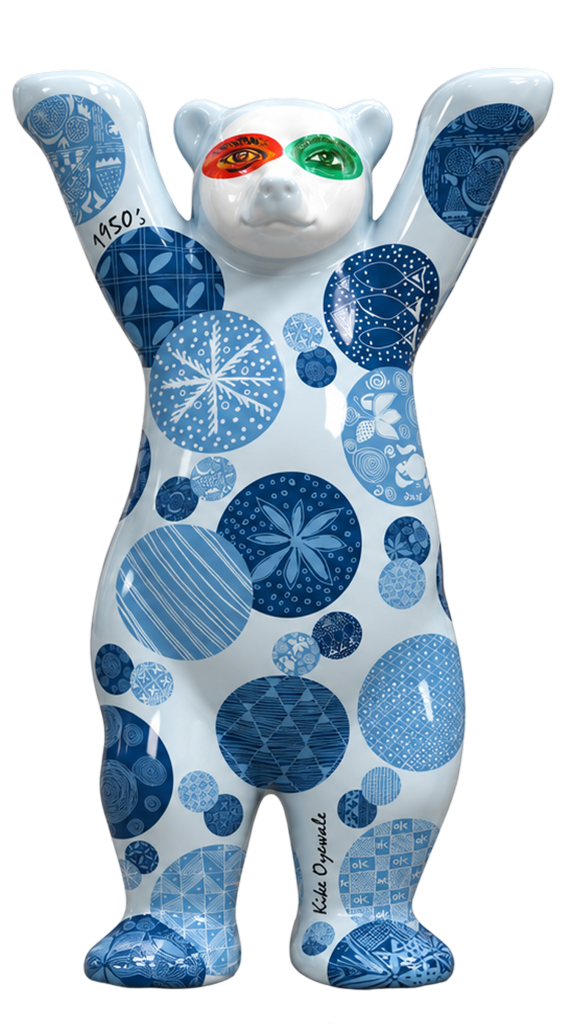
My work for the YoruBuddy represents the meeting of two creative cultures, Nigeria and Germany, connected not by sameness, but by curiosity, exchange and friendship.

At the centre of the work are two overlapping circles around the eyes. One carries the gaze of Nigeria and the other the gaze of Germany. Where they meet, a new visual space is created. The overlapping represents the moment when two cultures see one another, exchange knowledge and create something neither could produce alone.

The design on the body of the bear draws from Yoruba motifs, patterns and the visual language of Southwest Nigeria. Indigo refers to the centuries-old tradition of adire, transforming the bear’s surface into a field of cultural memory, craftsmanship and continuity. Rather than using these motifs simply as decoration, I use them as symbols of knowledge passed between generations.

The work also looks back to an important period of Nigerian–German artistic exchange beginning around the 1950s, when German born cultural figure Ulli Beier became deeply engaged with Nigerian artists, writers and Yoruba cultural practitioners. His encounters in Ibadan, Ede and Osogbo contributed to a wider environment of artistic dialogue that later surrounded institutions and movements such as Black Orpheus, Mbari and the Osogbo art movement. My work does not commemorate one individual; instead, it celebrates the larger principle behind such encounters: people from different cultures meeting through creativity, learning from one another and allowing those relationships to inspire future generations.

YoruBuddy therefore becomes more than a figure. It becomes a meeting point between Nigeria and Germany, tradition and contemporary expression, memory and possibility. The overlapping eyes in cirlce look both backward and forward: remembering a history of cultural exchange while imagining what the next generation of Nigerian and German creatives might build together.

With its arms raised in the welcoming gesture of the Buddy Bear, the work ultimately expresses friendship as an active creative force one capable of crossing geography, renewing culture and building a shared creative future. 

John Adediran

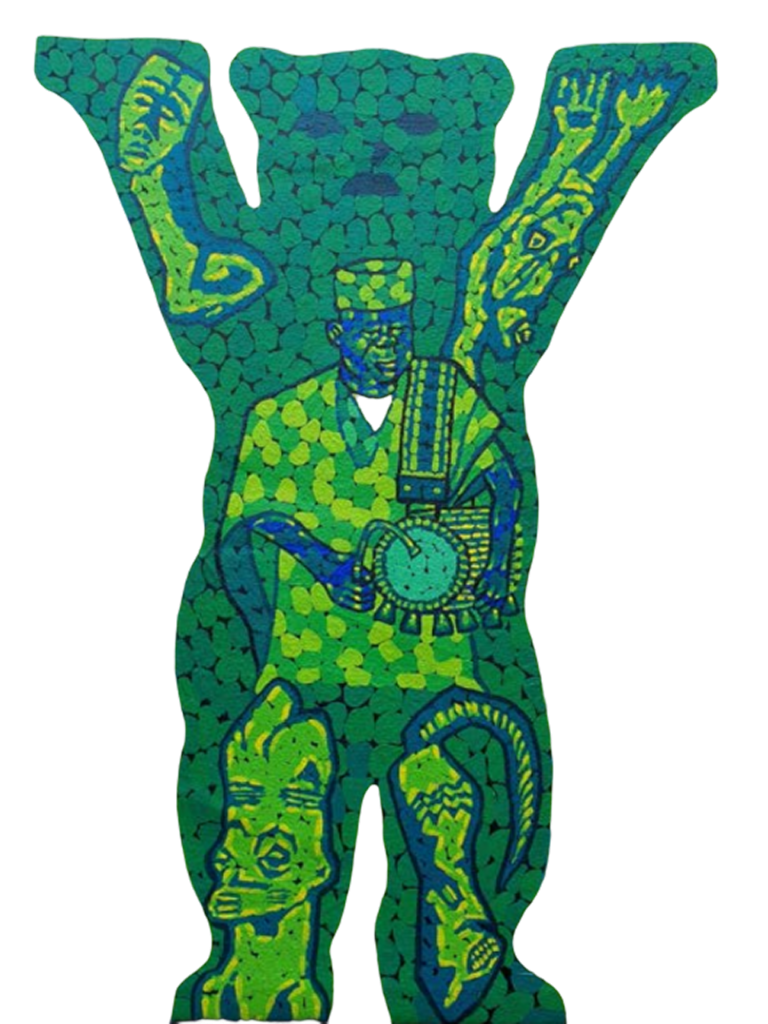
This YoruBuddy painting honors the precise moment of artistic genesis when Yoruba scholar E.L. Lasebikan inspired German academic Ulli Beier at the 1956 Paris Congress. By depicting Lasebikan’s presentation of Yoruba talking drum alongside elements of the resulting Black Orpheus journal, the design illustrates how indigenous performance sparked a monumental era of documenting and globalizing African literature 

Yemz Olapo

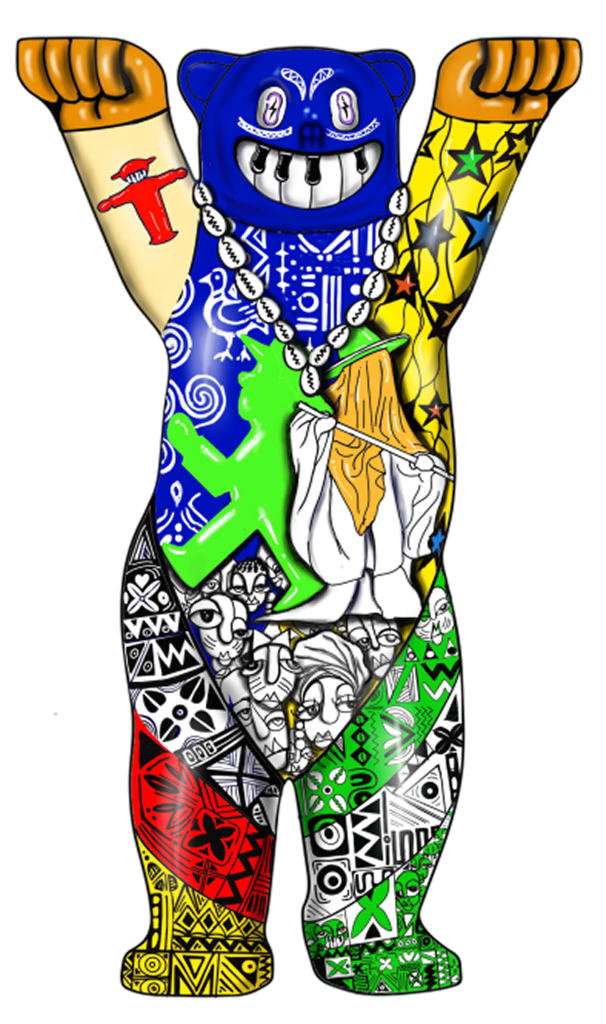
“I am inspired by the iconic posture of Fela Aníkúlápó Kútì with raised hands for freedom, a metaphor for the raised bear hand, a symbol of Joy and triumph over division. The saxophone rings wrap around Fela’s neck, becomes Cowrie shell, a symbol of

 money, protection and freedom. And the smiling piano teeth, a recurring signature of harmony and love in my works.

Cultural icons meet in active dialogue pairing Germany’s Iconic Ampelmann with Nigeria’s sacred Eyo masquerade. The ivory color of Berlin taxi, the legs ground the piece in national identity, featuring a dynamic split of German flag and Nigerian flag with African motifs alongside intricate Ankara and Adire-inspired patterns with Abeti-Aja Yoruba cap and Gele head doodles and tribal marks.

The Architectural Back Canvas

Shifting from the vibrant front, the back of the sculpture transforms into a deep royal blue Adire print style.

Top Landmarks: Flowing down from the top are iconic structures of Lagos, the Lekki-Ikoyi Link Bridge, the National Theatre, the Lagos Cathedral, Danfo bus, Aro-meta sculpture

Bottom Landmarks: Anchoring the base are historic and modern Berlin landmarks, featuring the Brandenburg Gate and the Fernsehturm TV Tower, Hot air balloons and sky scrapper and ZOID African head patterns.

At the heart of the back is a multi-colored fingerprint, rendered in the black, red, and gold of Germany flag and the green and white of Nigeria flag. It serves as a literal symbol of our shared human identity, freedom, cross-culture and the diplomatic friendship connecting both cities (Lagos and Berlin ).”

Ibraheem Shakioye

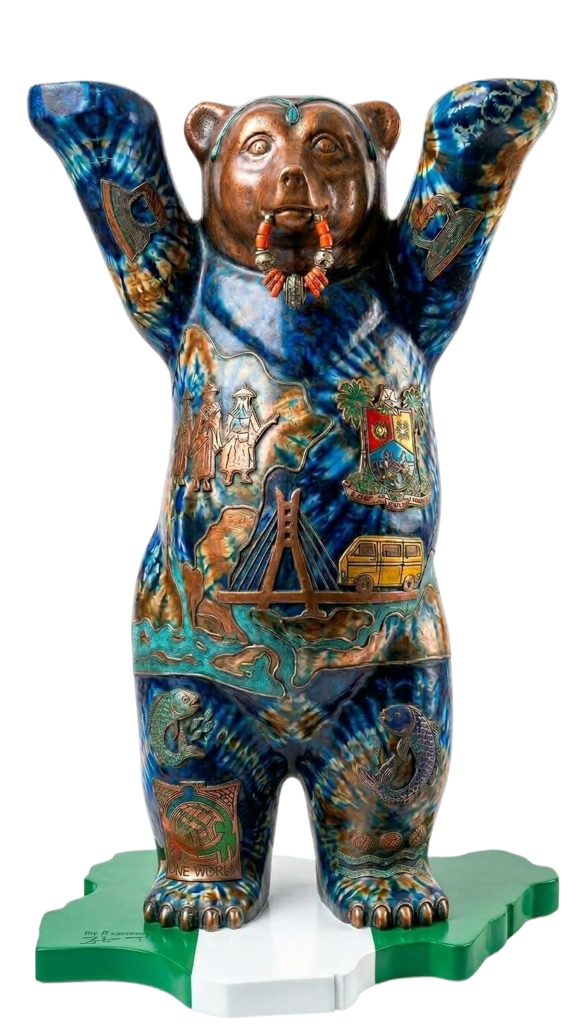
Nigerian Cultural Journey: transforms the global symbol of unity the Buddy Bear into a living sculpture celebrating Nigerian culture, heritage, and the dynamic energy of Lagos. Cast with a metallic bronze finish reminiscent of classical Ife and Benin bronzes, the sculpture fuses traditional artistry with contemporary urban identity. 

Hephzibah Asekhame

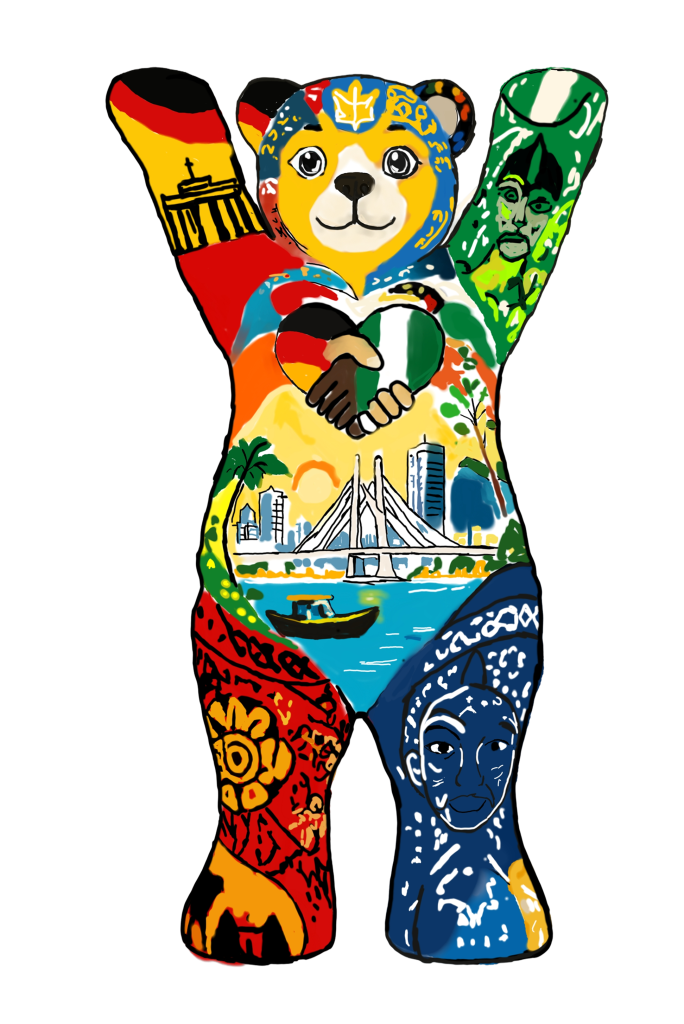
My artwork celebrates the connection between Nigeria and Germany through Yoruba Buddy, symbolizing unity in diversity. Nigeria’s green, white, and green colours meet Germany’s black, red, and gold, bringing two cultures together. The heart-shaped handshake represents friendship, mutual respect, and cooperation. Nigerian cultural patterns, Lagos-inspired scenery, and Germany’s Brandenburg Gate celebrate the identity and heritage of both nations. My message is that despite our differences, we can build a shared future of peace, understanding, and shared humility. 

Marvelous Akinkunmi

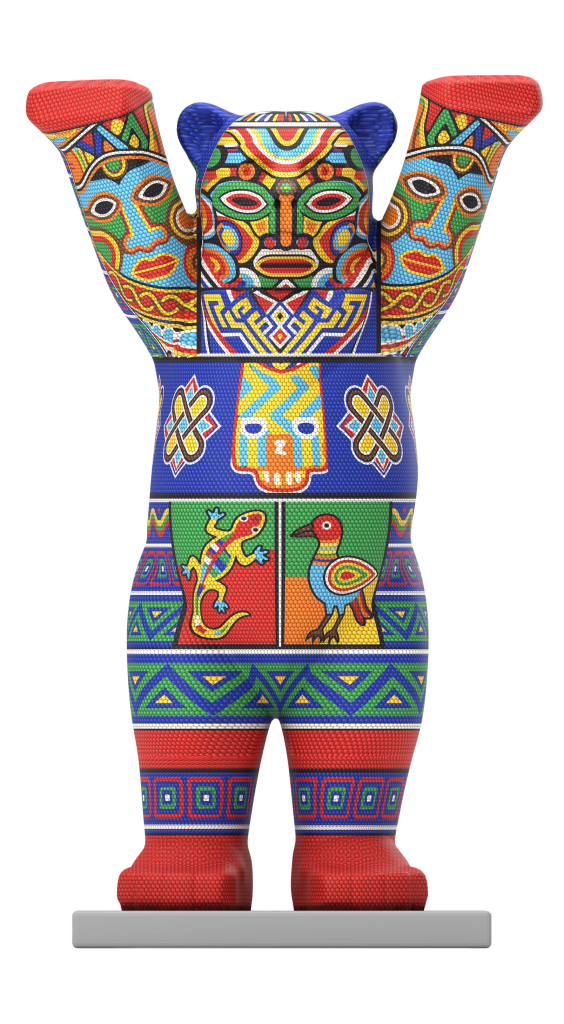
Ìlẹ̀kẹ̀ Buddy shows the Berlin Buddy Bear in the language of Yoruba beadwork. Beads have always carried meaning for the Yoruba: the beaded crown of the Ọba, coral worn as a sign of honour, and patterns that tell who you are and where you come from. In the 1960s Osogbo workshops of Ulli and Georgina Beier, Jimoh Buraimoh turned this tradition into a new art form, the bead painting. The rendition of my bear continues that story.

The bear wears a beaded crown-mask on its face and twin mask faces on its raised arms, picturing the Ìbejì twins and the joy of the Buddy pose: arms open. The chest has interlaced knots; a motif of connection found in Yoruba beadwork and adire, between small carved masks. On the belly, the lizard and the Okin royal bird recall the animal storytellers of Osogbo art. On the back of the head, I have an Eyo masquerade in white, enclosed with a flowering shape, commemorating the festival of Lagos. Zigzags, triangles, squares and waves wrap the body and legs like aṣọ-òkè and adire bands. Coral-red paws and feet finish the bear like coral beads on royalty.

Every surface uses one palette of bead colours – coral red, yellow, royal blue, sky blue, green, white and black, drawn as flat shapes with a beaded finish, so the bear reads clearly from far away and has detail up close.

Like the Bauhaus Vorkurs and the Osogbo workshops, the design grew through play: trying, cutting, redrawing and wrapping patterns around the form until they flowed as one story.

Ìlẹ̀kẹ̀ Buddy is a friendship bead between Germany and Nigeria, many small pieces, woven together into one bear.